Plumber Help for Water Heaters and Leak Repair
A water heater has a flair for drama. It rarely fails on a lazy Tuesday at 2 p.m. When everyone is calm, dressed, and emotionally prepared. No, it waits until guests are arriving, the laundry is halfway done, or someone has shampoo in their hair and suddenly discovers the shower has turned into a character-building exercise.
Leaks behave the same way. A tiny drip under the sink can spend weeks pretending to be harmless, then graduate into warped cabinet bottoms, swollen flooring, and that unmistakable smell of “something has been wet longer than anyone wants to admit.” This is where a good Plumber earns their keep. Not by waving a wrench around with theatrical confidence, but by knowing what to test, what to ignore, what to replace, and when the “simple fix” is actually the opening act of a bigger plumbing problem.
Water heater repair and plumbing leak repair sit right in that practical middle ground between comfort and damage control. They are not glamorous. Nobody posts vacation photos from the utility closet. But when hot water disappears or water starts showing up where it has no business being, these services become the most important thing in the house.
The humble water heater, quietly running the household
Most people think about the water heater only when it stops doing its job. That is a little unfair, considering how many daily tasks depend on it. Showers, dishwashing, laundry, handwashing, cleaning greasy pans, and scrubbing mysterious substances off children, pets, or both. The water heater sits in a closet, garage, basement, or utility room, doing repetitive labor like an appliance with a union grievance.
When hot water turns lukewarm, runs out too fast, smells odd, or makes popping noises, the problem may be simple. It may also be a sign that sediment, a failing part, poor installation, venting trouble, electrical issues, gas supply problems, or age has caught up with the unit. That is why Water heater repair is less about guessing and more about methodical troubleshooting.
A professional plumber looks at the whole picture. Is the unit electric or gas? Is it heating at all, heating slowly, or heating inconsistently? Is water leaking from a fitting, a valve, or the tank itself? Is the issue inside the heater, or is hot water being lost somewhere else in the plumbing system? I have seen homeowners blame the water heater when the real villain was a crossed connection, a tempering valve issue, or a fixture problem. Plumbing loves misdirection. It would be excellent at card tricks.
Repair or replacement is not a coin toss
The big question with a troubled water heater is usually whether to repair it or replace it. That decision depends on the age of the unit, the nature of the failure, the cost of the repair, the condition of the surrounding piping, and whether the current heater was properly sized and installed in the first place.
Some repairs are straightforward. A valve may need replacement. A heating element may fail. A thermostat can misbehave. Connections may leak. These are the kinds of problems that often justify repair when the tank is otherwise sound and the installation is safe.
A leaking tank is different. If the actual tank has failed, patching it is not a sensible long-term plan. That is not pessimism, that is physics with a mop. Once corrosion opens a path through the tank, the unit has usually reached the end of its useful service life. A plumber can verify where the leak originates, because water can travel along pipes and insulation before it shows itself. A puddle under the heater does not automatically mean the tank is ruptured, but it does mean someone should stop guessing and start inspecting.
Water heater installation also deserves more respect than it gets. A replacement is not just “put the new one where the old one was and hope the plumbing gods approve.” Proper installation involves correct connections, appropriate safety devices, sound venting where applicable, and compatibility with the building’s plumbing and mechanical systems. If the heater is part of a broader home comfort setup, the work may overlap with a Heating contractor, Gas installation service, or Electrician, depending on the equipment and local requirements.
That overlap is not unusual. Plumbing, heating, and air-conditioning work often live close together in real buildings. A water heater may need gas piping, electrical connections, combustion air, venting, drain routing, and sometimes coordination with other mechanical equipment. The best service calls are not turf wars. They are tidy little collaborations where every trade stays in its lane but understands the road.
The leak that looks small and acts expensive
A plumbing leak can be honest, like a pipe spraying water with all the subtlety of a garden hose. More often, it is sneaky. A supply line seeps behind a vanity. A drain leaks only when the sink is full. A toilet flange allows moisture into the subfloor. A pinhole in a pipe stains drywall one room away from the actual failure. A slab or concealed line leak may reveal itself through a warm floor, unexplained water use, or flooring that starts behaving like it has opinions.
Plumbing leak repair starts with location. Repairing the wrong section of pipe is a costly way to remain wet. A plumber uses experience and testing to separate the obvious from the actual. Water follows gravity, framing, pipe paths, and sometimes pure spite. The stain on the ceiling may not be directly below the leak. The puddle under the sink may be from a supply connection, a drain assembly, a garbage disposal connection, or condensation from a nearby line.
One memorable leak I saw looked, at first glance, like a failed kitchen faucet. The cabinet floor was damp, and the homeowner had already bought a replacement faucet. Sensible guess. Wrong guess. The leak only appeared when the dishwasher discharged. The drain hose connection was loose and sending just enough water backward to soak the cabinet without making a dramatic scene. A new faucet would have been a handsome but useless decoration.
That is why good leak repair often involves patience. Run the fixture. Dry the area. Check again. Test the drain. Check under pressure. Look at shutoff valves. Inspect nearby penetrations. The goal is not to perform the fastest repair. The goal is to perform the correct repair once.
When drain cleaning is part of the story
Not every water problem is a supply leak. Sometimes the issue is wastewater that refuses to leave. Slow drains, recurring clogs, gurgling fixtures, and backups point toward the drainage side of the plumbing system. This is where Drain cleaning, Rooter service, and sometimes Hydrojetting enter the conversation.
A simple clog near a fixture may clear with standard drain cleaning methods. Hair, soap residue, food waste, grease, and small objects all have a talent for gathering in exactly the wrong place. A deeper or recurring blockage may require rooter service, especially when the obstruction lies farther down the line. Hydrojetting can be useful in appropriate situations because it uses high-pressure water to scour buildup from pipe walls, but it is not a magic wand to be used blindly. Pipe condition matters. Access matters. The type of blockage matters.
A responsible plumber does not treat every slow drain like a battlefield requiring the biggest weapon. Sometimes the right move is modest. Sometimes the line needs a more aggressive cleaning. Sometimes the problem points toward damaged piping, poor slope, root intrusion, or a septic issue. If the property uses a septic system, Septic system service may be part of the broader diagnosis. A drain that backs up because the septic system cannot accept flow is not fixed by repeatedly clearing the same line and pretending the yard is innocent.
The plumbing and HVAC connection, less random than it sounds
A contractor who handles plumbing often works near heating, ventilation, and air-conditioning systems, and for good reason. These systems share mechanical rooms, utility spaces, drains, fuel lines, electrical needs, and customer panic levels. Officially, plumbing, heating, and air-conditioning are recognized as related special trade work, while electrical work is separately classified. In plain English, the trades are distinct, but the equipment often sits shoulder to shoulder like commuters in a crowded elevator.
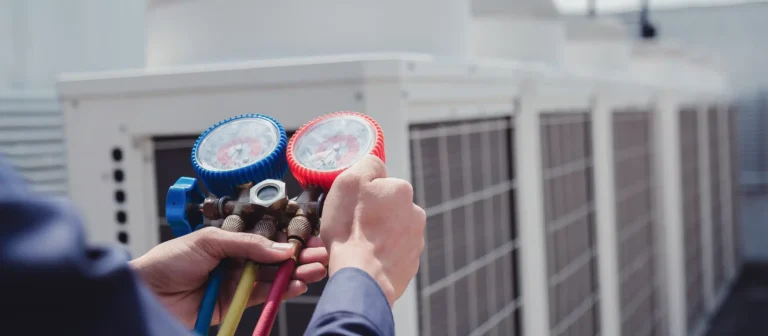
An Air conditioning contractor focuses on installing and maintaining heating, ventilation, and air-conditioning equipment. That work can include installation, maintenance, repairs, duct cleaning, and the plumbing or electrical work associated with heating and cooling equipment. So when a home has a leaking condensate drain, a heat pump water interaction, a furnace condensate issue, or equipment that requires both piping and wiring, the right service provider needs a working knowledge of how these systems affect one another.
For example, an air conditioner can produce condensate that must be drained properly. If that drain clogs or is routed poorly, water can show up near the air handler and look like a plumbing leak to the untrained eye. An Air conditioning repair service may handle the cooling-side issue, while a plumber may be needed if the drain ties into plumbing improperly or if there is a larger drainage concern. Nobody benefits from tradespeople pointing at each other like suspects in a dinner mystery. The homeowner wants the water gone, the equipment safe, and the bill to make sense.
The same applies to heat pumps. Heat pump installation depends on correct equipment sizing, proper refrigerant charging, and careful setup. Poor charging can waste energy and increase the risk of failure. That is HVAC territory, but the installation may still sit near plumbing systems, especially when condensate management, water lines, or mechanical Plumber room layout become part of the job.
Hot water, heating, cooling, and the fine art of not mixing up trades
People often call one contractor and ask for everything: hot water, cold air, warm rooms, lights, drains, and maybe a miracle if it is not too much trouble. Some service businesses provide multiple licensed trades. Others specialize tightly. The important part is not the logo on the van, it is whether the person doing the work is qualified for that specific task.
An Electrician should handle electrical work that falls under electrical trade requirements. A Lighting contractor is not automatically a plumber because both own ladders. A Furnace repair service or Heating contractor has expertise in heating equipment, combustion systems, airflow, and controls. A Gas installation service must understand gas piping, appliance connections, and safety requirements. An Air conditioning maintenance visit, Air conditioning tune-up, or Air conditioning repair appointment involves cooling equipment knowledge, including components and refrigerant-related rules that apply to air conditioners and refrigeration equipment.
The practical homeowner question is: who should you call first? If water is actively leaking from a pipe, valve, water heater, fixture, or drain, call a plumber. If the air conditioner is not cooling, the furnace is not heating, or the heat pump is struggling, call an HVAC contractor or the appropriate heating and cooling service. If power, wiring, panels, lighting circuits, or electrical safety is the issue, call an electrician. If the symptom crosses boundaries, such as water near HVAC equipment, describe exactly what you see and let the service company route the call properly.
That phone description matters. “There is water by the unit” is useful. “There is water by the indoor air-conditioning unit after it runs for twenty minutes” is better. “The water heater is leaking from the top connection, not the bottom of the tank” is better still. You do not need trade vocabulary. You need honest observations.
What to do before the plumber arrives
Panic is understandable, but water rewards calm action. The first few minutes can limit damage and help the technician diagnose the problem faster. If water is actively escaping, shutting off the right valve can turn an emergency into a repair appointment with wet socks.
Here is the short version worth taping inside the utility closet door, assuming tape still sticks in there:
- Shut off the local fixture valve if the leak is at a sink, toilet, appliance, or water heater connection.
- If the leak continues or you cannot find the local valve, shut off the main water supply.
- Turn off power to affected electric equipment if water is near electrical components, and avoid standing water.
- Move stored items away from the leak and place a pan or towels only if it is safe to do so.
- Take clear photos of the leak area before everything is moved, wiped, or heroically disassembled.
That last point may sound odd, but photos help. A plumber can often see flow direction, staining, corrosion, valve position, and installation details from a simple picture. Also, photos preserve evidence after the well-meaning family member with a towel has erased the crime scene.
For a leaking water heater, do not start removing parts unless you know exactly what you are doing. Shutting off water and the appropriate energy source may be necessary, but gas and electrical systems deserve respect. The goal is to prevent damage, not audition for a cautionary poster.
Water heater sizing and installation mistakes
A water heater that is too small will make everyone in the home suspicious of each other. Long showers become political. Laundry timing becomes strategy. The last person in line gets a cold rinse and a bitter worldview.
Sizing depends on demand, fixtures, household habits, and equipment type. Bigger is not always better. An oversized unit can cost more to buy and operate, while an undersized one cannot keep up. A professional installer considers usage instead of simply matching the old tank. The old unit may have been wrong for years. Many bad installations survive long enough to become tradition.
Installation quality matters just as much as equipment choice. Connections should be secure and serviceable. Safety components should be installed correctly. Drain routing should make sense. Gas, venting, and electrical work should be appropriate to the unit. The surrounding area should allow maintenance, inspection, and future replacement without requiring a demolition crew and a motivational speech.
This is where a plumbing company with broader mechanical awareness can be valuable. If the project touches gas piping, electrical supply, ventilation, or heating equipment, it may require coordination with the proper trade. The best contractors do not bluff their way through adjacent work. They either have qualified people for it or bring in the right professional.
Repiping, water softeners, and the bigger plumbing picture
Sometimes a leak is not a one-time event. If pipes are failing repeatedly, repairs can become a monthly subscription nobody signed up for. At that point, Plumbing repiping may be worth discussing. Repiping is a larger project, and no honest plumber recommends it casually. It involves cost, disruption, access, and planning. But if the system has widespread deterioration, frequent pinhole leaks, or outdated piping that keeps failing, replacing sections one at a time can become more expensive and irritating than a planned repipe.
Water quality also affects plumbing and water heaters. Hard water can contribute to mineral buildup in fixtures and equipment. Water softener installation may help in homes where hardness creates recurring issues, but it should be considered based on actual water conditions and household needs. A water softener is not a personality upgrade for the plumbing system. It is a tool, and like all tools, it belongs in the right situation.
The bigger point is that plumbing problems often form patterns. One leak may be bad luck. Three leaks in similar piping deserve attention. A water heater full of sediment, fixtures crusted with scale, and poor hot water performance may point toward a water quality discussion. https://startupxplore.com/en/startups/service-lion-plumbing-heating-air-electric Repeated drain clogs in the same line may indicate buildup, slope problems, pipe damage, or outside influences. A good plumber is not just fixing today’s complaint. They are reading the system.
Why maintenance is less boring than water damage
Maintenance has a public relations problem. It sounds dull. It lacks the urgency of a burst pipe or a dead water heater. Yet maintenance is where many expensive surprises get downgraded into manageable repairs.
For water heaters, maintenance may include checking visible connections, looking for corrosion, verifying safe operation, and addressing sediment where appropriate for the equipment and situation. For plumbing, maintenance means watching valves, drains, supply lines, fixture connections, and areas that tend to hide leaks until they become costly.
HVAC has the same logic. Air conditioning maintenance and an Air conditioning tune-up can help identify issues before peak cooling season, while heating service can do the same before cold weather. Proper HVAC installation also matters. Correct equipment sizing and proper refrigerant charging in an air conditioner or heat pump can reduce energy use and lower the risk of failure. Translation: guessing is expensive, and “close enough” is not a commissioning method.
Plumbing and HVAC maintenance share one useful habit: noticing changes early. New noises, longer run times, slow drains, fluctuating hot water, damp spots, odd odors, and higher utility use all deserve attention. Homes usually whisper before they yell. Unfortunately, the whisper often happens behind a cabinet next to a bottle of cleaner nobody has touched since 2019.
Signs that deserve a service call
Not every plumbing quirk requires emergency service, but some symptoms should move quickly to the top of the list. Water is patient. It can cause damage quietly while everyone debates whether it is “probably fine.”
Call for professional help when you notice:
- Water pooling near the water heater, especially if it returns after being dried.
- Hot water that runs out much faster than usual or never reaches normal temperature.
- Damp drywall, swollen flooring, musty cabinet odors, or stains that spread.
- Drains that repeatedly clog, gurgle, or back up after clearing.
- Shutoff valves that do not fully stop water when turned.
That last one is underrated. A shutoff valve that fails during a leak is like an umbrella with decorative holes. It looks prepared until the moment it matters. Replacing unreliable valves during routine work can save a lot of frantic crawling under sinks later.
The cost of waiting
People delay plumbing repairs for understandable reasons. They are busy. They do not want a service bill. They hope the drip will develop better manners. Sometimes waiting is harmless for a few days. Other times it turns a small repair into damaged flooring, mold concerns, ruined cabinets, or a water heater failure that arrives with theatrical timing.
A slow leak at a supply connection may waste water and damage the surrounding material. A drain leak may send dirty water into cabinets or walls. A water heater problem may worsen if corrosion or unsafe operating conditions are involved. A recurring clog may eventually become a backup. None of this means every drip is a catastrophe. It means uncertainty has a price.
A professional plumber helps sort urgency from annoyance. That judgment matters. Some repairs can be scheduled. Some need same-day attention. Some require shutting down equipment until the cause is known. The homeowner does not need to become a plumbing expert. They need someone who can look at the evidence and say, with earned confidence, “This is the problem, this is the risk, and this is the sensible fix.”
Choosing a plumber without falling for theater
A clean truck and confident handshake are nice. They are not diagnostics. When choosing help for water heater repair, water heater installation, plumbing leak repair, drain cleaning, rooter service, hydrojetting, or repiping, listen for how the contractor talks through the job.
Good plumbers ask questions. They want to know when the issue started, what fixtures are affected, whether the problem is constant or intermittent, and what has already been tried. They explain the difference between temporary relief and lasting repair. They do not pretend every job requires the most expensive option, and they do not promise miracles through drywall.
They also respect trade boundaries. If a repair touches gas, electrical, heating, cooling, or septic systems, they should either be properly qualified for that scope or recommend the right professional. Plumbing and HVAC often overlap in the real world, but overlap is not permission to improvise. An air conditioning contractor, heating contractor, furnace repair service, gas installation service, electrician, and septic system service each bring specific expertise. The smartest contractors know when to collaborate.
Wit has its place in this business, mostly because plumbing provides absurd moments. Toys in toilets. Wedding rings in traps. Water heaters making sounds like popcorn. But behind the humor is serious work. Water, heat, gas, electricity, drainage, and comfort systems all affect safety, property, and daily life. The work deserves skill, not guesswork with a flashlight.
A dry floor and a hot shower are underrated luxuries
Nobody applauds a water heater that works. Nobody sends thank-you notes to a dry pipe. Reliable plumbing is invisible until it fails, which is exactly why it deserves attention before the failure gets expensive.
Plumber help for water heaters and leak repair is not just about stopping water or restoring hot showers. It is about understanding the system behind the symptom. A puddle can be a failed valve, a leaking tank, a clogged drain, a condensate issue, or a pipe problem hiding elsewhere. Lukewarm water can be a part failure, sizing issue, installation flaw, or equipment at the end of its run. Slow drains can be simple buildup or a sign of deeper trouble.
The right professional brings order to that mess. They diagnose before replacing, repair where repair makes sense, recommend installation when the old equipment is done, and know when related trades need to be involved. That is the difference between a quick patch and a proper fix.
And if the repair means your morning shower goes back to being hot, steady, and uneventful, enjoy it. Uneventful is the dream. In plumbing, boring is not boring. Boring is victory wearing work boots.
Name: Service Lion Plumbing Heating Air Electric
Address: 521 W Briardale Ave, Orange, CA 92865, United States
Phone: (657) 567-7305
Website: https://callservicelion.com/
Email: [email protected]
Hours:
Monday: Open 24 hours
Tuesday: Open 24 hours
Wednesday: Open 24 hours
Thursday: Open 24 hours
Friday: Open 24 hours
Saturday: Open 24 hours
Sunday: Open 24 hours
Open-location code: R48R+WV Orange, California, USA
Map/listing URL:
https://www.google.com/maps/search/?api=1&query=Google&query_place_id=ChIJQU4LBWHV3IARtnABtyykSA4
Google Map:
Socials:
https://www.facebook.com/ServiceLionCA/
https://www.youtube.com/channel/UCR_L35QzsRTxYZtX8PxJvPw
Local Service Information
Service Lion Plumbing Heating Air Electric provides plumbing, drain, heating, air conditioning, and electrical services from its Orange, California location.The company serves homeowners and properties throughout Orange and communities across Orange County and surrounding areas.
Available services include plumbing repairs, water heater work, drain and sewer services, heating and cooling service, electrical repairs, panels, lighting, outlets, and related home-system work.
Service is available for residential properties as well as light commercial needs described within the company's local service-area information.
The company's website emphasizes locally operated service, coordinated home-system support, and practical scheduling for plumbing, HVAC, and electrical needs.
The matching public business listing shows the Orange location as open 24 hours a day, seven days a week.
For service information or scheduling, call (657) 567-7305 or visit https://callservicelion.com/.
The public map listing identifies the business at 521 W Briardale Ave, Orange, CA 92865 and can be used for location and direction information.
Popular Questions About Service Lion Plumbing Heating Air Electric
What services does Service Lion Plumbing Heating Air Electric provide?
The company provides plumbing, drain and sewer, heating, air conditioning, and electrical services. Its published services include plumbing repair, water heaters, drain clearing, sewer work, HVAC repair and installation, electrical repairs, panels, circuit breakers, lighting, outlets, and related services.
Where is Service Lion Plumbing Heating Air Electric located?
The matching business location is 521 W Briardale Ave, Orange, CA 92865, United States.
What areas does Service Lion Plumbing Heating Air Electric serve?
The company serves Orange County and surrounding communities. Its published service-area information includes Orange, Anaheim, Brea, Yorba Linda, Fullerton, Huntington Beach, Newport Beach, Costa Mesa, Irvine, Lake Forest, and additional nearby cities.
Is Service Lion Plumbing Heating Air Electric open 24 hours?
The matching public business listing shows the location as open 24 hours on Monday through Sunday.
Does Service Lion Plumbing Heating Air Electric work on drains and sewer lines?
Yes. Published services include drain clearing, rooter service, camera inspection, hydro jetting, sewer line repair and installation, water line work, slab leak detection, and trenchless sewer line repair.
Does Service Lion Plumbing Heating Air Electric provide heating and air conditioning service?
Yes. Its published HVAC services include air conditioning repair and installation, heating service, furnace work, heat pumps, air ducts, indoor air quality assessments, and thermostat installation.
Does Service Lion Plumbing Heating Air Electric provide electrical service?
Yes. Published electrical services include repairs and installations, electrical panels, circuit breakers, safety inspections, lighting, outlets and switches, surge protection, generators, and EV charging equipment installation.
How can I contact Service Lion Plumbing Heating Air Electric?
Call (657) 567-7305.
Email: [email protected]
Website: https://callservicelion.com/
Facebook: https://www.facebook.com/ServiceLionCA/
Landmarks Near Orange, California
Old Towne Orange Historic District
A central historic district and useful geographic reference point for the Orange community.
Plaza Park
A well-known public gathering point in the center of Old Towne Orange.
Orange Public Library & History Center
A civic landmark serving residents near central Orange.
Hart Park
A major public park and recreation area south of central Orange.
Eisenhower Park
A public park serving neighborhoods in northern Orange.
Santiago Oaks Regional Park
A regional recreation and open-space landmark on the eastern side of Orange.
Irvine Regional Park
A large regional park and recognizable reference point east of the city.
Orange Park Acres
A distinctive residential community and service-area reference point in eastern Orange.
El Modena
An established Orange neighborhood that provides a practical local coverage reference.
Glassell Street
One of the city's principal north-south streets and a useful route through central Orange.
Lincoln Avenue
A major east-west roadway serving northern Orange and nearby communities.
State Route 55
A primary regional freeway connecting Orange with other parts of Orange County.